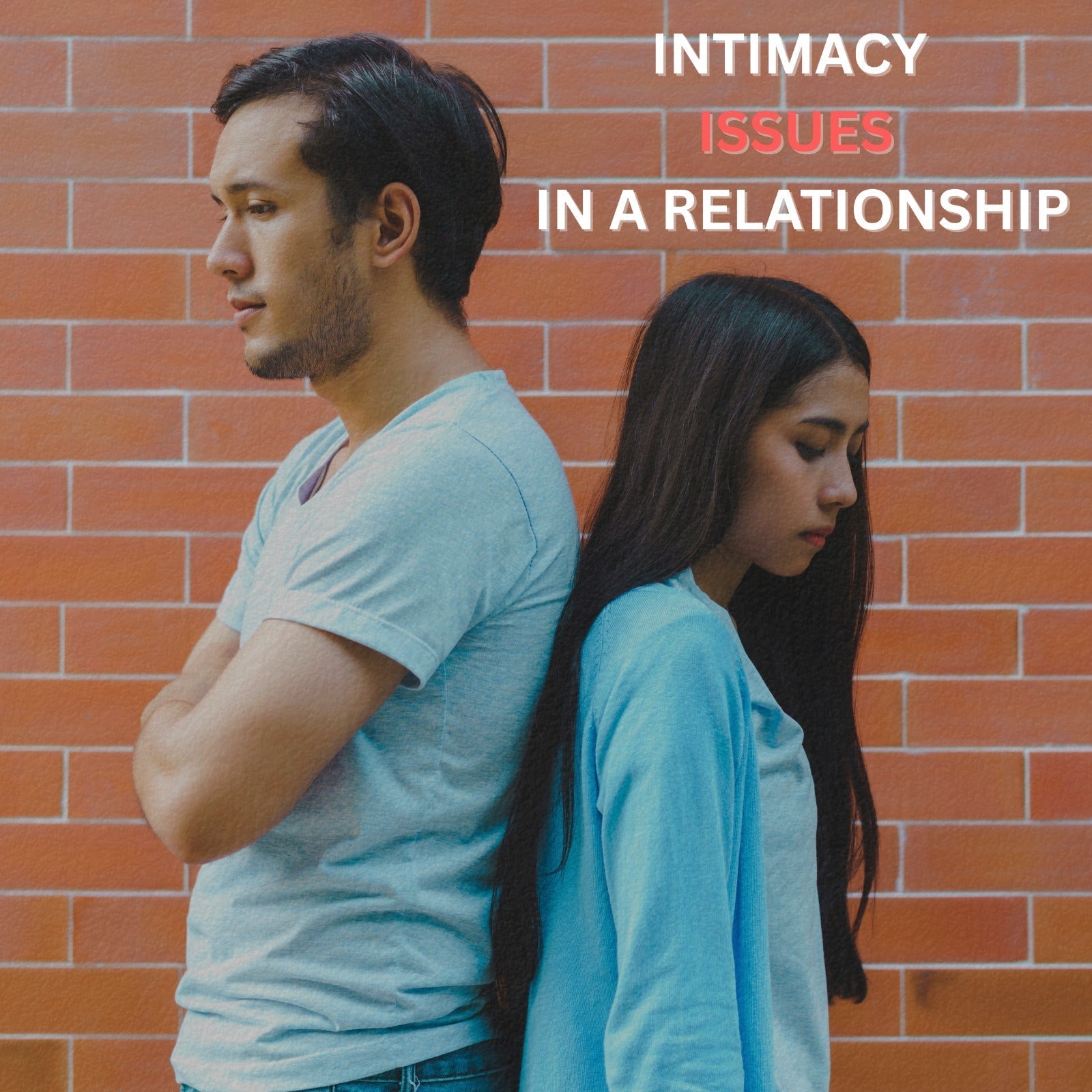

He said it like a brag.
"We never fight."
He was sitting across from me in the first session, arms loosely crossed, a half smile on his face. The kind of smile that is trying very hard to seem unbothered.
She was sitting beside him.
Not next to him. Beside him. The way two strangers sit on a train when every other seat is taken.
She did not say anything. She just looked at her hands.
And in that silence, I understood everything I needed to understand about why they were here.
* * *
The Relationship That Looked Perfect From the Outside
They had been together for nine years. Married for six.
No infidelity. No addiction. No dramatic falling out. No screaming matches at midnight or plates thrown across the kitchen. Nothing you could point to on a list and say: that. That is the thing that broke them.
Their friends called them the stable couple. The ones who had figured it out. The ones other people quietly envied at dinner parties.
And yet here they were. Sitting in my room. Not looking at each other. Not touching. Not even slightly leaning toward the other person the way people in love tend to do without realising it.
He was 35. She was 33.
And somewhere between their second anniversary and now, they had quietly, politely, with no argument at all, stopped being a couple. They had become two people managing a shared calendar.
* * *
What Conflict-Avoidance Actually Costs a Relationship
Most people think the goal of a good relationship is to have fewer fights.
I want to say this as clearly as I can: that is not true.
The goal of a good relationship is to have safe conflict. The kind where both people can say what is actually true for them, feel heard, feel respected, and come out the other side still choosing each other.
When that safety does not exist, people do not stop having needs. They stop expressing them.
And unexpressed needs do not disappear. They calcify. They harden into quiet resentment that has no name and no single source. They become the reason she stops reaching for his hand. The reason he stops asking how her day actually was, not the performative version she gives at dinner, but the real one.
In couples and relationships therapy, this pattern has a name. It is called conflict avoidance. And it is one of the most damaging things that can happen to a long-term relationship, not because it looks like damage, but because it looks like peace.
That is precisely what makes it so dangerous.
* * *
The First Session: When Politeness Becomes a Weapon
I asked them a simple question in our first session.
"When was the last time either of you said something to the other that was hard to say?"
He thought about it for a long time.
She did not need to think.
"I don't remember," she said. Quietly. Without accusation. Just... tired.
He looked at her then. Genuinely looked. Maybe for the first time in months.
"We just don't want to hurt each other," he said. He meant it as an explanation. It came out sounding like a confession.
And that is the thing about couples who have stopped fighting: they usually started that way for a beautiful reason. They love each other enough to not want to cause pain. They swallow the difficult thing because they do not want to be the person who ruined a perfectly good evening.
Once. Twice. A hundred times.
And then one day, they wake up next to someone they no longer know how to talk to. Not because the love is gone. Because the conversation has been buried under three years of careful, loving, suffocating silence.
* * *
What She Had Never Said Out Loud
By the third session, she started talking.
Not about the big things. About the small ones. The ones that accumulate.
She told me she had stopped telling him when she was stressed at work. Not because he was unsympathetic. Because every time she brought it up, he would immediately go into problem-solving mode. He would make a list. He would suggest she speak to her manager. He would research solutions.
And she just wanted him to sit with her in it for five minutes.
She had told him this once, early in their marriage. He had heard it as criticism. She had watched his face close. She had watched him try and she had watched him fail and she had watched him feel bad about failing.
And she had decided, quietly, on her own, that it was easier not to bring it up.
"I didn't want him to feel bad," she said. "So I just... handled it alone."
He sat very still when she said this.
"I didn't know you were doing that," he said.
"I know," she said. "That's the problem."
This is what couples and relationships therapy does at its most essential level. It creates a room where the things that have been too risky to say out loud can finally be said. Not to wound. To be known.
Because the alternative, three years of careful silence, had not protected them. It had made them strangers.
* * *
What He Had Never Admitted, Even to Himself
He opened up in the fourth session.
He talked about how he had learned, growing up, that emotions made people uncomfortable. That his father had dealt with his mother's feelings by fixing them or dismissing them. That he had watched this his whole childhood and had told himself he would be different.
And he had tried. He genuinely had.
But trying to be different when you do not have the tools looks a lot like pretending. It looks like nodding when you do not understand. It looks like asking "are you okay?" and hoping the answer is yes so you can move on. It looks like changing the subject when things get heavy because you do not know what to do with heavy things.
"I thought I was being easy to be with. I didn't realise I was being absent."
That sentence was the turning point.
Not because it solved anything. Sentences do not solve things. But because it meant he had finally seen himself clearly. Not as a victim of her silence. Not as a man doing his best with no feedback. As a person who had, without meaning to, made it unsafe for his wife to need things from him.
That is the hardest moment in couples and relationships therapy. When the person who thought they were holding everything together realises they were also holding everything at arm's length.
* * *
The Silence Was Not Peace. It Was Surrender.
There is a particular kind of relationship suffering that never gets talked about.
Not the dramatic kind. Not the betrayal kind. Not the kind that ends in screaming or ultimatums or someone sleeping on a friend's sofa.
The quiet kind.
The kind where two people are deeply decent human beings who love each other and have simply, over time, stopped fighting for the relationship. Not because they stopped caring. Because fighting felt too risky. Because disagreement felt like danger. Because saying "I need more from you" felt like saying "you are not enough." And who wants to say that to someone they love?
So instead they say nothing.
And nothing becomes the language of the relationship.
And the relationship becomes a very comfortable, very organised, very utterly empty place to live.
This is what couples and relationships therapy is built for. Not the dramatic crises. The quiet ones. The ones where nobody is the villain. Where both people are simply two conflict-avoidant human beings who love each other and have quietly, accidentally, let the relationship starve.
* * *
What Changed: And What Did Not Come Easily
Progress in their sessions was not linear.
He tried to have a difficult conversation and retreated mid-sentence when he saw her expression shift. She tried to express a need and apologised for it immediately, the way people apologise for taking up space.
Old patterns do not leave quietly. They come back at inconvenient moments. They show up as a voice in the back of your head that says: this will only make things worse. Just let it go.
But they kept coming back to the sessions. Week after week. And slowly, the room between them started to feel different.
She stopped softening everything she said until it meant nothing.
He stopped fixing and started sitting with her in the discomfort.
They had their first real argument in three years in the seventh session. About something small, objectively. About a decision he had made about a holiday without consulting her. It was about autonomy and being seen and feeling like a partner and not an afterthought.
It was not a clean fight. It was messy and uncomfortable and both of them said things imperfectly.
And at the end of it, she looked at him and said something.
"I forgot what it felt like to actually talk to you."
He reached for her hand.
She let him.
* * *
If Your Relationship Has Gone Quiet
Not every quiet relationship is a peaceful one.
Some quiet is earned. The comfortable silence of two people who know each other so deeply that words are not always needed. That silence feels warm. It feels safe.
But some silence is a symptom. The silence of two people who have stopped trying. Who have decided, separately and without discussing it, that it is easier to coexist than to risk the discomfort of actually connecting.
That silence feels hollow. It feels polite. It feels like being very lonely in a room with someone you used to know.
If you recognise that feeling, it does not mean your relationship is over. It means it has been running on empty for long enough that it needs attention. Real attention. The kind that a trained couples and relationships therapist can help you give it.
The absence of fighting is not the same as the presence of love. And the presence of routine is not the same as the presence of connection.
A relationship can look stable from the outside and be starving on the inside.
Couples and relationships therapy exists precisely for those relationships. The ones that have not broken apart dramatically but have quietly, slowly, almost imperceptibly, come apart at the seams.
* * *
Conclusion
They came to me to fix their communication.
What they actually needed was permission to stop being so careful with each other.
Permission to need things. To say hard things. To be imperfect and honest and present in the way that only becomes possible when you trust that the other person will still be there after the uncomfortable part.
That is what couples and relationships therapy gave them. Not a script. Not a set of rules. A room where the silence finally had to speak.
They are still together. Still learning. Still occasionally retreating into old patterns when life gets heavy and the old instincts kick in.
But now they catch it. Now they say: "We are going quiet again. Let us not do that."
That is not a small thing.
That is everything.
If your relationship has gone quiet in a way that no longer feels peaceful, Kama Health India connects you with experienced couples and relationships therapists who work in a safe, confidential, and non-judgmental space. Sometimes the bravest thing two people can do is finally stop being polite with each other.
Book a Session with a Couples and Relationships Therapist at KamaHealth India
kamahealthindia.com/pages/therapy-plans
* * *
FAQs
1. What is couples and relationships therapy?
It is a professional, structured form of counselling that helps partners understand the emotional and communication patterns affecting their relationship. A trained therapist works with both individuals to rebuild connection, improve honest communication, and address the root causes of distance, whether that distance looks like conflict or silence.
2. Is couples and relationships therapy only for relationships in crisis?
No. Many couples seek therapy not because something dramatic has happened, but because the relationship has slowly become distant, routine, or emotionally flat. Couples and relationships therapy is equally effective for couples who feel disconnected but cannot identify a single cause, which is often the more common situation.
3. What is conflict avoidance in a relationship and why is it harmful?
Conflict avoidance is a pattern where one or both partners consistently avoid difficult conversations to prevent discomfort or disagreement. While it can feel like keeping the peace, it actually prevents genuine connection. Needs go unexpressed, resentment builds quietly, and partners slowly become strangers inside a functioning relationship. Couples and relationships therapy helps identify and gently dismantle this pattern.
4. How many sessions of couples therapy does it take to see a difference?
Most couples begin noticing meaningful shifts within 6 to 10 sessions, though this varies depending on how long the patterns have been in place and the openness both partners bring to the process. Some couples work through specific issues in a shorter time; others choose longer-term support for deeper relational growth.
5. Can couples and relationships therapy help even if only one partner wants to try it?
Yes. Individual couples-focused therapy sessions can help one partner understand their own role in relationship patterns, which often creates a noticeable shift in the dynamic even before both people are in the room together.