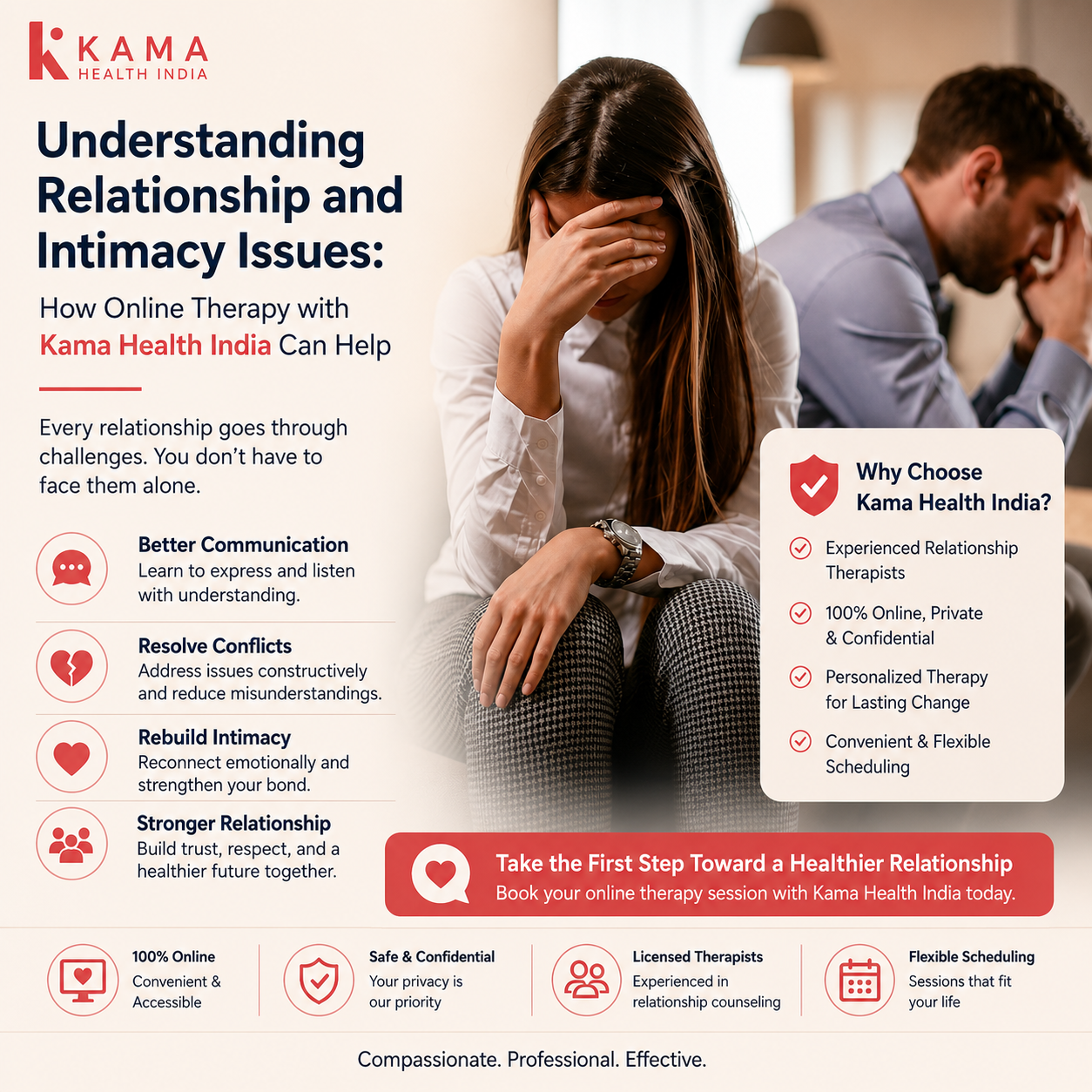

It is not uncommon for couples to underestimate the prevalence of intimacy issues in a relationship. Simply having love in a relationship does not necessarily mean that there will be intimacy. If these issues in a relationship are not addressed, they can result in emotional distance, frustration, misunderstandings, and even sexual dissatisfaction.
What Are Intimacy Issues in a Relationship?
Intimacy exists beyond sexual activity because it includes trust and emotional vulnerability, which people show through their affectionate bonds and their need for understanding each other.
There are four types of intimacy that people use to connect with their partners.
-
Emotional intimacy – People who share their fears and needs as well as their feelings with others experience this state of emotional security.
-
Physical intimacy – People use physical intimacy to express their affection through non-sexual physical contact, which includes activities like holding hands, hugging, and sitting in close proximity.
-
Sexual intimacy – Sexual intimacy means having a mutual desire/pleasure in your sexual activity together.
-
Intellectual intimacy – Intellectual intimacy means freely sharing their thoughts, ideas, and feelings with each other without any reservation.
The listed intimacy problems become apparent when any one of the intimacy areas starts to lose its strength.
Common Causes of Intimacy Issues in a Relationship
1. Poor Communication
Emotional distance arises between couples when they fail to share their true feelings. The avoidance of tough discussions creates a situation that builds resentment between people.
2. Stress and Mental Health Concerns
Work stress and financial pressure, together with anxiety and depression, lead to decreased emotional capacity. Mental health problems create a dual effect that decreases sexual attraction and hinders emotional connection.
3. Past Trauma or Attachment Issues
People who experienced unsafe relationships during their childhood or their past romantic relationships develop difficulties with trust. People who experience insecure attachment develop difficulties forming close relationships, and they spend their time fearing partner abandonment.
4. Sexual Dissatisfaction
The absence of open discussions about sexual needs leads to increasing relationship misunderstandings between partners. A relationship faces intimacy challenges when partners have different levels of sexual desire and when they fail to resolve their sexual problems.
5. Unresolved Conflict
When there is constant criticism in a relationship, it results in the partners becoming defensive, emotionally withdrawing from each other, and as a result, having problems with intimacy. Coupled with each other, negative patterns of interaction over time will continue to erode emotional safety between partners and ultimately result in more significant difficulties with intimacy issues in a relationship.
Signs of Intimacy Problems in a Relationship
-
Avoiding physical displays of affection like hugging or holding hands.
-
Having arguments about small or minor things.
-
Having conversations that lack emotional intimacy.
-
Having a hard time having deep conversations.
-
Feeling like they are living with roommates.
Summary
The issues couples face concerning intimacy rarely happen overnight. They develop over a period of time, during which time emotional safety, communication, and sexual connection become weaker. Knowing what the causes are, along with identifying early on if there is a problem, will help the couple confront the issue most effectively before it becomes more severe.
FAQs
1. What are the most common issues in a relationship?
Common intimacy issues in a relationship include emotional distance, lack of communication, reduced physical affection, and sexual dissatisfaction.
2. How do I talk to my partner about intimacy issues?
You should start the conversation by using a gentle method that enables you to share your emotions without putting blame on your partner. You should use "I feel" statements together with your need for connection to express your feelings without attacking your partner.
3. Can these issues in a relationship be fixed?
Undoubtedly, most intimacy issues in a relationship get better if the spirits of open communication, emotional safety, and sometimes professional therapy are present over them.
4. Do intimacy issues always mean the relationship is unhealthy?
The answer is no because many couples experience periods of low intimacy during stressful times and life transitions, but continue to maintain their relationship.
5. When should we seek professional help for intimacy issues?
When couples experience ongoing intimate relationship problems that result in emotional distress and negative effects on both their mental health and sexual health, then couples therapy becomes necessary.