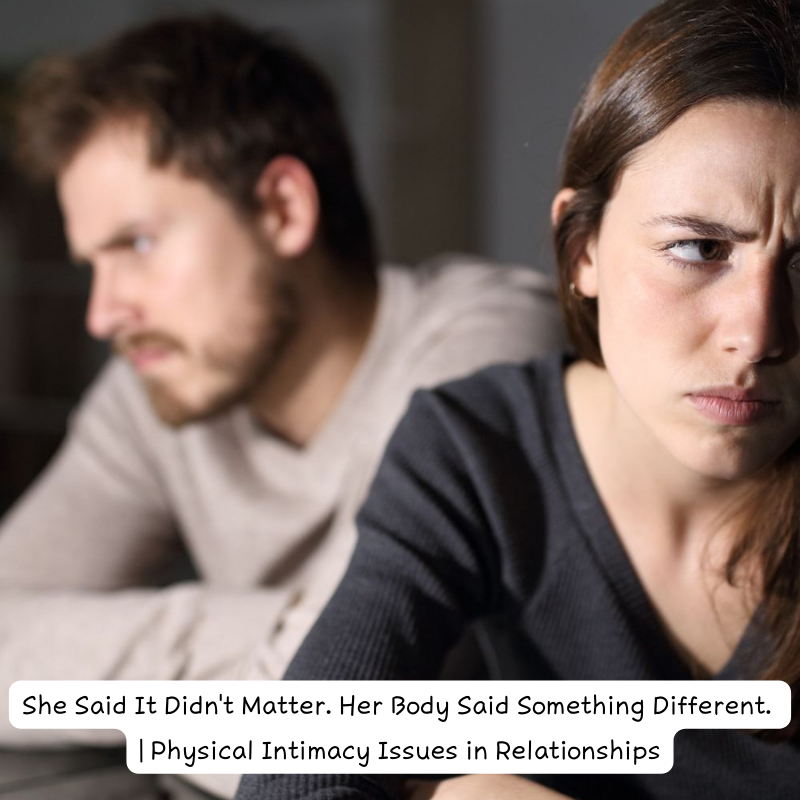

She said something very quietly during the first session.
“Nothing is wrong between us… but we haven’t touched in months.”
She was not angry.
Just confused.
They had been married for six years. Both were working professionals. Their life looked stable. No dramatic arguments. No betrayal.
But something had shifted.
They continued to sleep together. Still spoke about their days. Still had plans for the weekend.
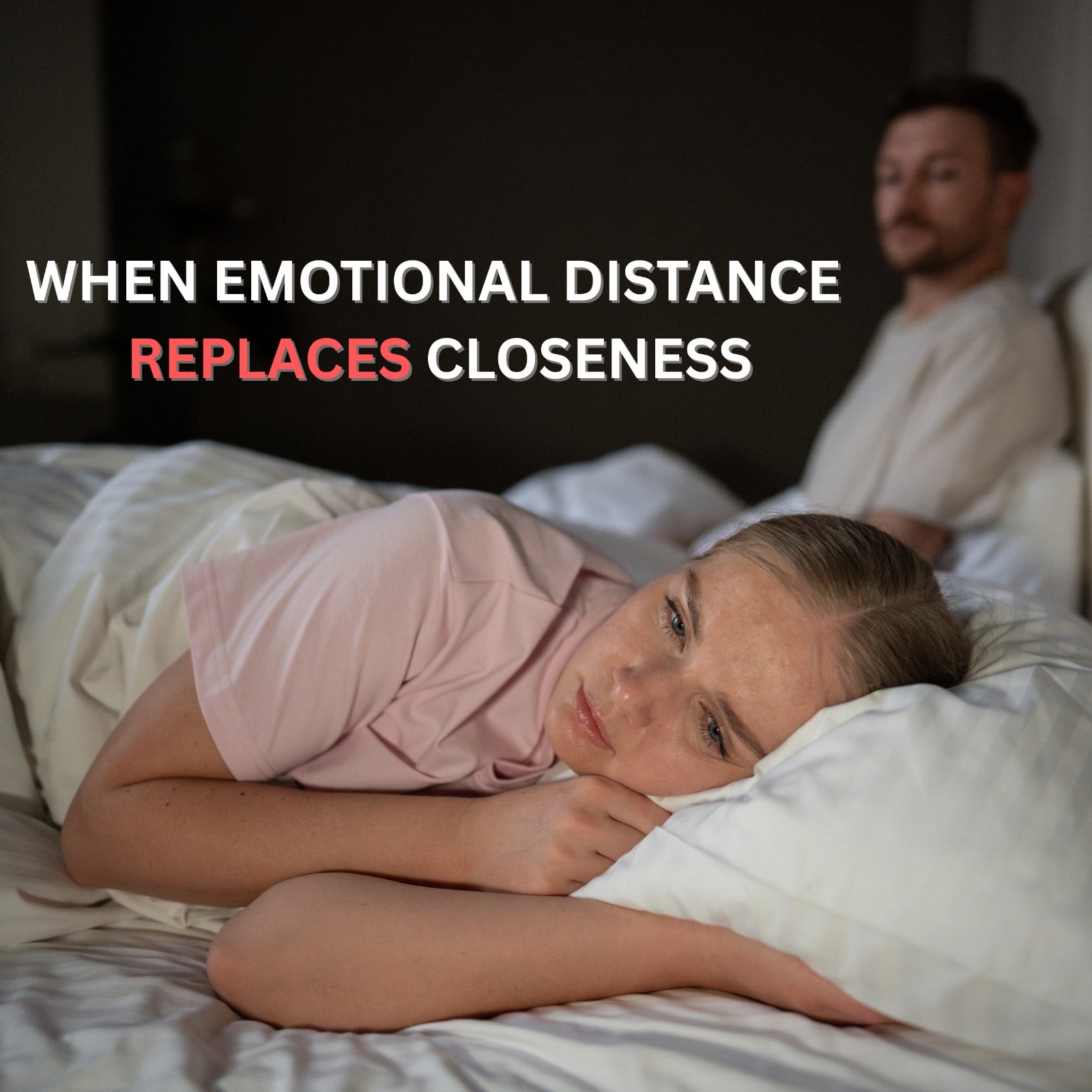
But each night when the lights went out, a small distance appeared between them, and neither of them knew how to close it.
Understanding When Physical Intimacy Issues in Relationships Begin
When couples talk about physical intimacy in relationships, they often assume the problem started in the bedroom.
But most of the time, it begins somewhere quieter.
In the case of this couple, the distance had begun with daily stress. Long workdays. Conversations that slowly became practical instead of emotional.
She saw it differently. “It felt like he was correcting me instead of listening,” she said.
Thus, she no longer shared so much.
The touch began to feel unfamiliar. Not unwanted, just... distant.
Physical Intimacy Issues in Relationships Seem Baffling
Her husband appeared truly confused when he entered the next session.
He said, “I thought everything was all right.”
And in many ways, it was.
They were still in love and lived together based on mutual respect and companionship. But now emotional intimacy had silently gone.
Little by little, both of them adjusted to the space between them. She stopped reaching for his hand, and he stopped trying to initiate affection.
That is how the couple's physical intimacy issues in relationships usually arise, not fighting, but because of small emotional misunderstandings that grow over time.
What Changed in the Room
Our collaboration was not initially centered on physical proximity.
Instead, we focused on emotional presence.
Learning to sit side by side. Listening without rushing to solve the problem. Telling things that had been evaded all these years.
There was a session one evening when she said something that changed the mood in this room.
“I do not require you to make everything all right. I just need you to be there."
He nodded slowly. Then touched her hand, as he had not done in a long time.
It was a small gesture. But for them, it felt enormous.
When emotional safety begins to return, physical intimacy issues in relationships often decrease naturally.
Not as a strategy. But as a natural response.
Conclusion: When Distance Starts to Feel Like Home
It is not uncommon to hear many couples express the notion that intimacy is gone due to something being broken in the relationship.
Often, it simply means emotional connection has been neglected for too long.
An intimacy therapist can help couples understand the patterns behind the distance and rebuild closeness safely.
Kama Health India introduces those individuals and couples to skilled intimacy therapists who can help relationships by both giving them emotional and physical reconnection in a confidential and non-judgmental environment.
Since intimacy does not just vanish overnight.
And with the right support, closeness can slowly return the same way it faded through small moments of understanding.
FAQs
- Are physical intimacy issues in relationships normal?
Yes. These issues occur more often than people are willing to admit.
2. Does reduced physical intimacy mean the love is gone?
Not all the time. This often reflects how partners respond to emotional stress or distance, not that their love has disappeared.
3. How do I talk about physical distance without hurting my partner?
You should speak in a soft manner while explaining your emotional state to your partner. Your main goal should be to build a connection with your partner instead of finding faults in them.
4. Can intimacy return after a period of distance?
Yes, it can. The process of building emotional safety, which creates trusting relationships, leads to people developing intimacy.
5. When should we seek help for physical intimacy issues in relationships?
The partners need professional assistance when they experience emotional distress because their physical connection has deteriorated.