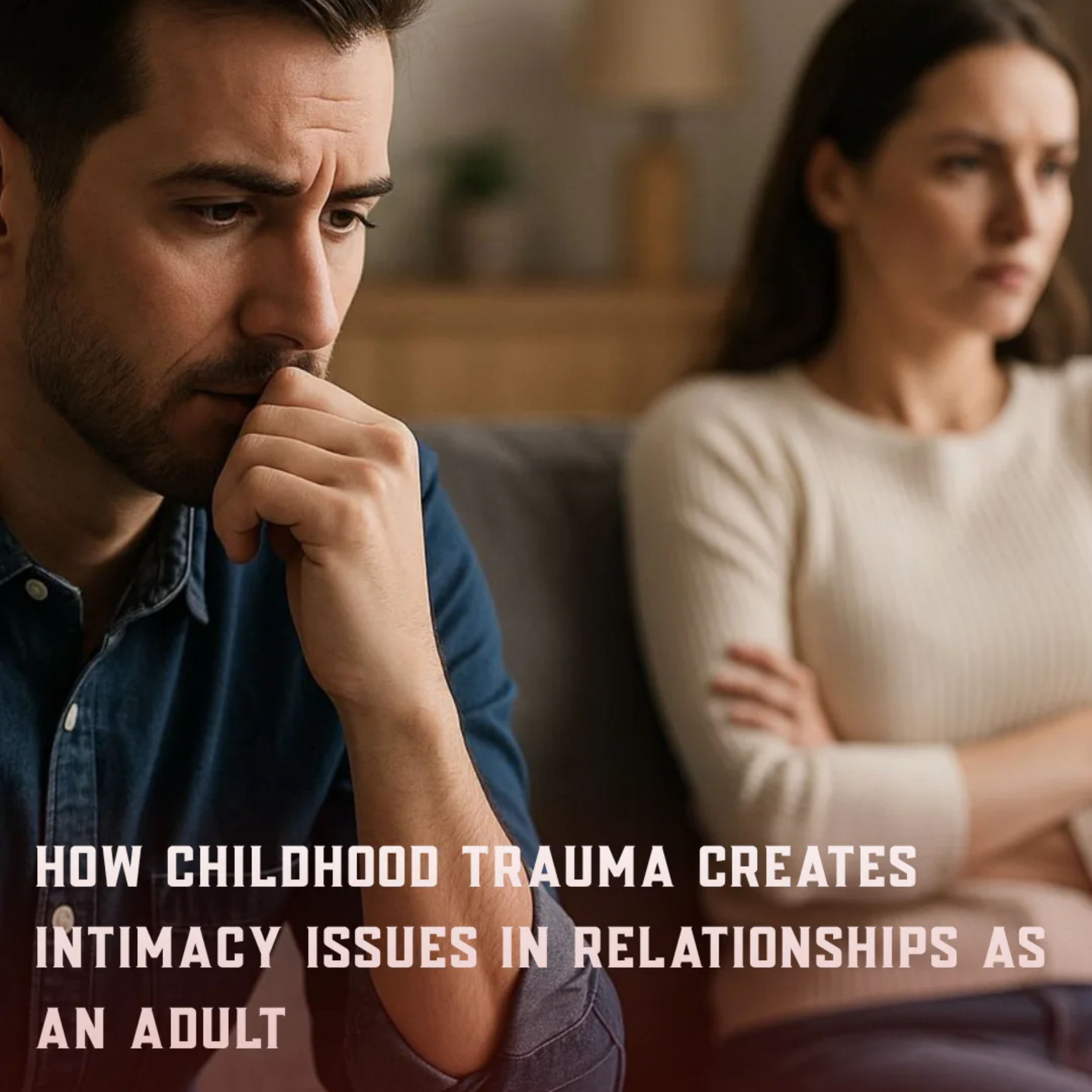

She used to count the days.
Not the way you count down to something good. The way you count down to something you are not ready for.
Monday. He will probably ask tonight.
Tuesday. He asked. I said I was tired.
Wednesday. He did not ask. I felt relieved. Then I felt guilty for feeling relieved.
Thursday. He asked again. I said yes. My body was there. I was not.
She had been living like this for two years before she walked into my room.
She was 28. He was 31. Married for three years. And she had spent most of those three years quietly managing something she did not have the language for yet.
She just knew that every time he reached for her at night, something in her chest tightened. Not with fear. Not with disgust. With a kind of tired resignation that she could not explain and did not know how to talk about.
"I love him," she said, very carefully. "I just don't want... that. Not anymore. Maybe not ever again. And I don't know what that means about me."
* * *
When One Person's Need Becomes the Other Person's Weight
Sex and relationship issues rarely arrive loudly.
They arrive in the small moments. In the way she starts going to bed a little later, hoping he will be asleep by the time she gets there. In the way he starts sensing the distance and reaches more, not less, because need tends to intensify when it goes unmet. In the way she begins to read his affection as pressure. In the way he begins to read her distance as rejection.
Neither of them is wrong.
Both of them are suffering.
This is the pattern clinicians call desire discrepancy. One partner wants physical intimacy more frequently, more urgently, than the other. It is one of the most common sex and relationship issues I see in my practice. And it is also one of the most misunderstood, because it gets framed as a problem with the person who wants less.
She is cold. She has lost interest. Something is wrong with her.
That framing is not just unhelpful. It is actively harmful.
Because in almost every case I have worked with, the partner with lower desire is not broken. They are exhausted. They are emotionally disconnected. They are carrying something the relationship has not yet given them a safe space to put down.
* * *
What Her Body Was Trying to Say
By the second session, we started going deeper.
I asked her when she had last felt genuinely drawn toward her husband. Not obligated. Not performing. Actually wanting.
She thought about it for a long time.
"Maybe the first year. When things were new. When I still felt like he was choosing me, not just expecting me."
That last phrase stopped me.
Not just expecting me.
This is the shift that happens in many long-term relationships and sits at the heart of unresolved sex and relationship issues. In the beginning, desire is fuelled by novelty, by uncertainty, by the electric feeling of being chosen by someone who did not have to choose you. Over time, that electricity settles. Which is normal. Which is human. But for some couples, it does not settle into warmth and safety. It settles into assumption.
He had stopped courting her. Not cruelly. Unconsciously. The way most people do when they believe the relationship is secured.
She had felt it. Her body had felt it before her mind could name it.
And her body had responded the only way it knew how. It had quietly closed the door.
* * *
When He Finally Came In
She asked him to join the third session.
He sat down looking the way most men look when they have been told, in some form, that they are the reason something is wrong. Defensive. Confused. Hurt in a way he was covering with stillness.
He was not a bad man. He was not aggressive. He had never once pressured her in the way that word implies force.
But he had done something that is just as damaging in its own quiet way.
He had made physical intimacy the primary language of his love. And when she stopped speaking it, he heard silence where he used to hear belonging. So he asked more. Reached more. Needed more.
And the more he reached, the more she retreated.
"I thought if I showed her I still wanted her, she would come back," he said.
"I know. But it felt like being wanted for what I could give. Not for who I am."
The room went very still.
This is the conversation that most couples dealing with sex and relationship issues never have. Not because they do not feel it. Because they do not know it is allowed to be said out loud.
* * *
What Desire Discrepancy Actually Is and What It Is Not
Here is what I want every couple reading this to understand.
Desire discrepancy is not a verdict on your relationship. It is not proof that one person loves the other less. It is not a permanent condition. It is a signal.
A signal that something in the emotional architecture of the relationship needs attention.
In her case, several things were happening at once.
She was carrying a level of mental load, work, home, family obligations, that had left her body chronically depleted. Research is consistent on this: when the nervous system is in a sustained state of stress, sexual desire is among the first things to go quiet. The body prioritises survival over intimacy. This is not a character flaw. It is biology.
She also had a history, one she had never shared with him, of feeling that her needs in the relationship came second. Small things. The holidays always planned around his preferences. The conversations that circled back to his day, his stress, his needs. Nothing dramatic. A slow accumulation of feeling like a supporting character in her own marriage.
Her low desire was not about sex.
It was about feeling unseen in the relationship for long enough that her body stopped wanting to be close to the person who was not seeing her.
That is the truth about most sex and relationship issues that present as desire problems. The body is not malfunctioning. The body is responding accurately to what the emotional environment has been providing.
* * *
What Changed in the Room
The work was slow. And it was not always comfortable.
He had to learn something that did not come naturally to him: that desire cannot be pursued into existence. That the more you chase it, the faster it runs. That what his wife needed from him was not more wanting. It was more seeing.
He started small. He asked about her day and actually listened, all the way through, without waiting for his turn to speak. He started handling things she had silently been carrying without being asked. He planned something for her, just her, with no expectation attached to it.
She had to do her own work too. She had to learn to say, out loud, what she needed. Not hint at it. Not wait for him to guess. Not decide it was not worth the friction.
She had to learn that expressing a need was not the same as making a demand. And that a partner who loved her would want to know.
Eight sessions in, she said something I have not forgotten.
"Last week, he cancelled his plans to sit with me when I had a hard day at work. He didn't try to fix it. He just sat there. And that night, for the first time in I don't know how long, I wanted to be close to him."
She looked slightly startled by her own words.
Like she had not expected the door to open that way.
* * *
If You Recognise This
Sex and relationship issues that look like desire problems are almost never only about desire.
They are about emotional safety. About feeling chosen, not assumed. About the accumulated weight of unspoken needs in a relationship that has stopped making space for them.
If you are the partner with lower desire, you are not broken. You are not withholding. Your body is communicating something the relationship needs to hear.
If you are the partner whose desire goes unmet, your pain is real. But reaching harder is not the answer. Being present, genuinely present, in the ways that matter to your partner, usually is.
And if you are both exhausted from this cycle without knowing how to leave it, that is exactly what therapy is for.
Sex and relationship issues are among the most treatable concerns I work with. Not because there is a formula. Because when two people finally sit in a room and say what has actually been true for them, something shifts. Almost every time.
* * *
Conclusion
She did not come to me because she had stopped loving him.
She came because her body had been quietly keeping score of everything her heart had not yet said out loud.
That is what unresolved sex and relationship issues look like from the inside. Not dramatic. Not broken. Just two people who have been missing each other, in the dark, for longer than either of them realised.
They are still together. Still learning the difference between wanting someone and making them feel wanted.
It turns out those are not the same thing.
And knowing the difference changed everything.
If this story felt familiar, KamaHealth India connects you with experienced therapists who specialise in sex and relationship issues, working with couples and individuals in a safe, confidential, and non-judgmental space.
Book a Session at KamaHealth India
kamahealthindia.com/pages/therapy-plans
* * *
FAQs
1. What are sex and relationship issues?
Sex and relationship issues refer to any emotional, physical, or communicative challenges that affect intimacy and connection between partners. This includes desire discrepancy, emotional disconnection, sexual dissatisfaction, performance anxiety, and the impact of stress or unresolved conflict on physical closeness.
2. What is desire discrepancy and is it common?
Desire discrepancy is when two partners have significantly different levels of sexual interest or frequency needs. It is one of the most common sex and relationship issues seen in therapy, and it is not a sign that the relationship is failing. It is a signal that emotional and relational needs may not be fully met.
3. Can sex and relationship issues be resolved through therapy?
Yes. Sex and relationship therapy helps couples identify the emotional patterns beneath physical disconnection. When both partners feel heard and emotionally safe, physical intimacy often improves as a natural consequence of that deeper connection.
4. Why does stress affect sexual desire?
When the body is under sustained stress, it prioritises survival functions over intimacy. Desire is one of the first things to go quiet under chronic pressure. This is a biological response, not a personal failing, and it is one of the most common underlying factors in sex and relationship issues.
5. When should a couple seek help for sex and relationship issues?
If physical disconnection has persisted for several months, if one or both partners feel unheard or unseen in the relationship, or if the gap in desire has created resentment, avoidance, or emotional distance, speaking with a therapist who specialises in sex and relationship issues is a meaningful and effective step.